Saturday, 16 July 2016

Breaking Down a Mobile Home | Moving.

This was posted by Rob

toter pulling a mobile home to a new locationBreaking down a mobile home means that the home is taken apart at the roof, end walls and floor prior to moving the sections to a new location.

Assuming that the homeowner has previously removed all of  their furniture, personal belongings to a safe location.

The breakdown process usually takes a whole day and around 5 people to do the job safely having the home ready for transport during daylight.

How Much will it Cost to Move My Mobile Home?

I can only answer this question for my own area which is central Florida , but here the main costs will include:

  • Set up crew for one day (4-5 men).
  • Skirting removal.
  • Anchor removal.
  • Polythene wrap and furring strips.
  • Axle and tire rental. (slips)
  • Hitches.
  • Utility Disconnect.
  • Site clean up and dumpster if needed.
  • Transporting the materials to the new site.

Extra cost which are not included or may be incurred:

  • Cost of the Toter transport and escorts.
  • Welding Hitches.
  • Taking down and replacing fences and gates.
  • Attachments (sheds,Garages etc)
  • Tree trimming or removal.
  • Building ramps or bridges.
  • Concrete removal and disposal.
  • Use of a bull dozer.
  • Raised Roof houses.
  • Multi level structures

 What will the Moving Crew do on Day One?

The process involves the setup crew arriving at the site removing the skirting around the house to allow easy access. At this point the electrical service, plumbing pipe and AC connections are removed from under the home.

The anchor straps are carefully disconnected or cut to leave enough room for future use so long as the straps meet the present 15-c installation code.

Inside the home the close up trim its carefully removed for future use and the carpet is cut and tacked back from the centerline if it is going to be reused. The trim is labelled and usually transported inside the home.

The crossover electrical wires and plumbing pipes are all disconnected and removed in such a way that they have the best chance of being able to be reinstalled at the new location.

If the home has lap siding on the ends this needs to be removed and each piece numbered for future use. Usually the contractor will wrap up the pieces and place them inside the home for transportation.

Before the home can be split apart the whe wheels and axles need to be installed. Sometimes they are still under the mobile home but usually the crew will bring a set of adjustable axles called “slips” and all of the essential nuts, bolts and hanging gear.

If the hitches were removed and left under the home they may be good enough to reuse. If in good condition the hitches are bolted back into their original location. Usually with older  houses a new set of  hitches will be welded onto the frame if
the old ones all rusty and unusable.

Now the shingle on the peak of the roof can be taken off and the flashing removed. The lag bolts are  removed
from the roof, the end walls and the floor. Some homes will also be spiked in the floor with 8 inch nails which will need to be cut with a reciprocating saw.

This is usually a good time to remove the side wall anchors from the ground. The anchor heads are sharp and can easily burst the tires when the home is pulled of the construction site.

Chains and come-alongs are attached to the I beams of the home so that the home can now be raised up on jacks with rollers then gently rolled apart whilst still maintaining tight control. The set up crew will need the home sections to be at least 4 feet apart for working space.

All base pads, concrete block, wood and wedges should now be removed and placed on a separate trailer for transportation to the new job site along with any usable  a/c units,  ductwork, steps and plumbing pipe.

The sections of the trailer home now need to be wrapped with polythene and furring strips to prevent wind and water damage during transportation by toter.

There are a couple of important things to note:
(1)When a home is taken apart no matter how carefully and transported to a new
location to be be a re assembled it will not look any better than it did before the
move.

(2)New shingle nailed to the roof may not match the old shingles exactly.

(3)Vinyl skirting may not fit in a new location due to a different slope or increased
height of the new set.

These may seem obvious points but unfortunately sometimes miracles are expected.

Everything needs to be put into a contract with contingency plans for when things
don’t go exactly as planned.

Originally posted 2014-11-14 01:15:59.

The post Breaking Down a Mobile Home | Moving. appeared first on Level My Mobile Home.


source http://levelmymobilehome.com/breaking-down-mobile-home-moving/

Friday, 15 July 2016

Installing, Setting up your home| Set Up.

This was posted by Rob

mobile home setup and installation 1st half on the spotInstallation or “Set up” as it is otherwise known in the industry is the complete process of putting your mobile home on vacant land or mobile home park lot.

In Florida only a licensed mobile home installer can install a mobile home.
This setup process includes but is by no means limited to:

Permits & Plans.
Necessary permissions from local government agencies.

Currently most states and counties require a licensed contractor to obtain a permit, surveys, submit site plans and pay the necessary county and impact fees.

Building a pad.
Bringing in fill dirt to build a foundation pad.

This is a requirement of Florida State statute 15c to ensure adequate storm drainage and to prevent standing water collecting under the home.

mobile home set up contractorsFrame Blocking.
Raising the home to the required level and placing the mobile home on concrete blocks.

Anchoring
Installing ground anchors and longitudinal systems.

Tiedown.
Connecting anchors to the home’s steel beams with hurricane straps.

Joining sections together.
Raising and pulling sections of the home together, and then securing with fasteners.

Raising Roofs.
Some homes have a normal 6/12 pitch roof which needs to be raised on site.

Septic Tanks.
Homes often require a septic tank and drainfield for waste management.

Plumbing.
Connecting the home to a sewer or septic system.

Electric.
Installing a service pole or connecting to existing grid.

Air Conditioning.
Delivery and installation of HVAC  services and equipment/units.

Our company has been involved in set up for the last 16 years.

Call 863 808 2200

>>>>>More information on this page <<<<<<

Originally posted 2014-10-26 20:29:31.

The post Installing, Setting up your home| Set Up. appeared first on Level My Mobile Home.


source http://levelmymobilehome.com/installing-your-home/

Thursday, 14 July 2016

Mobile Home Demolition and Removal

This was posted by Rob

mobile home demolition and removalThe saying “all good things must come to an end” definitely applies to mobile homes especially homes made 20 or 30 years that suffer storm damage, or those old homes with particleboard floors in the kitchens and bathrooms.

Unless the home has received some love and attention over the years there comes a point where it no longer makes sense to carry out the necessary repairs.

When it comes time to call it a day there are basically two options, demolition on site or transportation to a landfill location close by. Both of these options do cost money.

Sometimes however a contractor will consider taking a house for free if it can be repaired or has recycling potential.


Mobile Home Removal Services on Site

Sometimes I visit the home site where the mobile home owner has been doing their best to fight back the ravages of time. Covering holes in the ceiling with plastic where needed.

The type of ceiling in the image below is just fine until it gets wet, it has a 1 inch thick insulated backing onto a cardboard facing. When wet it continues to soak up the water until the board can no longer hold the weight and it falls through to the floor making a big mess.

demolition water damage

There comes a point where there is more repair than good ceiling. Probably time for a good session of serious thinking about the future of your home.

ceiling damage for demo

Obviously if your ceiling is leaking then so is your roof.

roof damage to fascia and soffit


So what is it like under your mobile home?

Is the underbelly ripped open with the floor insulation hanging out or perhaps laying on the ground. This can cause mould to form and the floor to rot

under belly damage

Onsite demolition involves the complete removal of everything on the job sites with the exception of concrete pads and driveways which are in reasonable condition and can be utilized by the new homeowner.

The old home is crushed using an excavator with a special attachment claw. The “I” beams are usually cut into pieces using an oxy/acetylene cutting torch. The concrete blocks and anchors are also removed from the site along with utility pipes electrical wires, air conditioning units and duct work.

Most of the debris will be crushed by a front end loader, trencher or powerful bobcat and placed into dumpsters. The average doublewide home will fill three to four 30 yard dumpsters.

Some materials may be recycled for future use or sold for scrap but that will be up to the demolition contractor who will be doing all of the work and will usually not make a concession against the contract cost.

This process usually takes longer, is more labor intensive and still involves the cost of a machinery, dumpsters and landfill disposal fees.

Mobile Home Disposal and Removal to a Land Fill.

Mobile Home Demolition and RemovalThe most important consideration is that the old mobile home must be in good enough condition to allow transportation to the nearest landfill site. Once there it will be flipped on its side to allow the removal of the I beams, wheels and axles prior to crushing.

The setup crew will be needed to separate the sections and place them on wheels and axles. The old hitches will probably not be serviceable and new hitches will need to be purchased and welded to the frame prior to break down.

The home may need to be rolled/moved prior to hooking up the toter.

Escort cars and oversize load signs may be required for wider homes.

There are breakdown fees, axles and tires, transportation and disposal fees.

Mobile Home Demolition costs.

The method chosen will need to take into consideration time factors, the distance to the nearest landfill and financial position of the homeowner. Contracts need to specify the extent of the work and leave no doubt as to the responsibilities of the parties.

The cost of a mobile home demolition or disposal can and will vary widely.

To give you a rough idea of the demolition costs I will list the components of the job with an estimate of the cost in the State of Florida:

Item

Low Cost

High Cost
Heavy machinery inc. drop off and pickup 750

1250

One Driver 200 400
Dumpsters x 3     $10-15  per yard 900 1400
Three man break down/clean up crew 600 750
Sub Total 2450 3800
Contractor % 490

760

Total

2940 4560


Originally posted 2014-09-13 22:39:31.

The post Mobile Home Demolition and Removal appeared first on Level My Mobile Home.


source http://levelmymobilehome.com/mobile-home-demolition-and-removal/

Wednesday, 13 July 2016

Manufactured Home Transport – Mobile Home Toter

This was posted by Rob

Yellow-bulldozer-making-a-padBack in the day your average person with a little bit of ingenuity was able to hook their mobile home to the back of their truck and head off into the sunset.

Those days are long over now and transporting your mobile home from one location to another requires special equipment, a robust truck and a professional driver.
Today’s mobile home and modular structures can be four sections wide and up to three floors in height.

New Homes Transport.
When a New Mobile home leaves the factory for the long journey to its destination each section requires a special truck known the trade of the toter.

The toter trucks are usually equipped with the latest in a hitch technology allowing movement in six directions, this makes the spotting of the house a simple procedure.
In addition to this great care has usually been taken by the factory sales dept or dealer lot to ensure that everything is in place on the new job site.

Moving a new manufactured home from the factory or dealership to its final location
either in a park or purchased land should be fairly simple but sometimes trees and over hanging branches need to be removed.

Used Trailer Transportation with a Toter.
Used mobile homes sometimes can be a little more challenging due to the fact that they are being moved from one site to another and have already been installed once.
The setup crew will need to take special precautions when wrapping the house and also may be required to get the house off its original site to the highway and onto the new site location with translifts, and rollers and hydraulic jacks.

Moving a Mobile Home Down the Public Highway.
Once off the site the trailer that will be transported needs special lights, oversize load signs, licensed escorts, perhaps a permit and maybe even a pole car.

If the home is 16 feet the driver will need to follow the predetermined route.

Special consideration will be given to low hanging power lines and trees along the specified route.
How Much does it cost to move a Double wide.

The price that you are quoted will vary widely but is usually a fixed price for a move of up to 50 miles or part thereof, sometimes as much as $500 per section.

Often cheaper if you get everything done by the same contractor.

Due to the nature of the business some drivers will require 50% up front and the balance before unhooking at the final destination although larger operations will bill a home owner through the mobile home contractor.

Originally posted 2014-08-06 21:54:35.

The post Manufactured Home Transport – Mobile Home Toter appeared first on Level My Mobile Home.


source http://levelmymobilehome.com/transportation/

Tuesday, 12 July 2016

Tree Services

This was posted by Rob

tree removal services lakelandIf you are installing a mobile home on your own land and need trees removing or trimming prior to moving or setting.  If you need storm damage removal:

Level my mobile home

For all of your storm clean up, tree trimming and tree removal.

Call     (863) 808 2200    

Free estimates.

We only use licensed and insured contractors.

Originally posted 2014-07-21 14:51:19.

The post Tree Services appeared first on Level My Mobile Home.


source http://levelmymobilehome.com/tree-services/

Monday, 11 July 2016

How to Level My Mobile Home, Full Water Level Instructions for Home Owners.

This was posted by Rob

modular home in florida

Before you get into the meat and potatoes, please understand that mobile homes in particular but also most structures that are built on on soil , fill dirt, sand and clay will settle over time. This is entirely normal and in no way a bad reflection of the contractors work.

How much a structure will settle and how fast it will become unlevel will depend on the load bearing capacity of the ground under the home, the weight if the structure and the footprint of the supports.

When it comes to mobile homes it is the size and number of the pads / pier supports being used. All other things being equal the more piers the harder the ground and the bigger the pads the better. It is common sense that  a heavy home will need more support especially on loose ground.

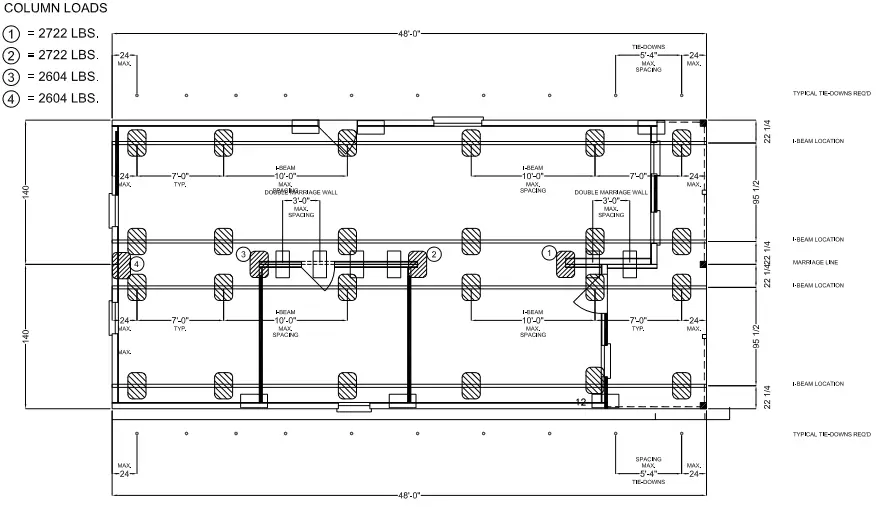
The State of Florida has addressed these issues in their new home installation standards Rule Chapter 15C-1 where they insist on soil tests and load bearing charts as part of the set up procedure for used homes in Florida. These rules do not actually apply to the re leveling of homes but most contractors will apply the rules as much as possible.

blocking diagram showing pier loads and pad locations

Below is an article about leveling a mobile home it contains all of the steps, tools and tips that you will need do do a good job. Take your time, be safe and get a professional if you have any doubts about your capacity to complete the job.

What you will learn :

  1. What to look for, signs your home is out of level.
  2. Should I hire a contractor?
  3. How to use a water level, detailed instructions.
  4. How to level your home DIY instructions.
  5. Summary

So lets begin:

There are many reasons to level your home, some are more obvious than others.

The more obvious signs of needing to relevel a trailer would be:

  •     Visual signs of leaning.
  •     Doors that stick or swing in one direction.
  •     Windows that won’t open or close properly.
  •     Cracks in the ceiling or wall joints.
  •     Problems with awnings and attachments.

Sometimes you just have a feeling that things are not level when you move around your home, it just doesn’t look or feel right. Some homeowners are acutely aware of the problem while others find out after playing ball with the kids and notice the strange roll to one side of the home.

Most of these issues will be resolved once you home is level.

Should I hire a contractor or Do it myself?

This is not a job that needs to be performed on a regular basis and so learning the necessary skills would  not be productive use of a handy mans time or resources. Leveling a home is a task best left to an expert contractor for a number of reasons. Secondly some of the tools required are expensive and would not get the amount of use required to justify the initial cost.

Last but not least are the safety considerations of inexperienced workers tackling strange jobs on structures that can weigh in excess of 10 tons. There are some obvious safety issues involved

A local set up company can usually re level a mobile home in one day at a reasonable cost with little disruption of family life.

How Much will it Cost to Level my 76′ Palm Harbor Doublewide Home?

In my particular area the cost to level a mobile home starts at around $650.  This is for a double wide and usually includes materials and labor. Singlewide homes are usually a little less but the costs for the crew, the truck and time make it impossible to level a home for some of the projects and still earn money for the contractor.

If the particular job involves the addition of more frame piers or center supports then the cost will start to rise by up to $30 dollars per pier installed including materials and labor.


If you decide to do this job yourself you will need to know how to use a water level.

In most situations the best type of level to use is a water level.

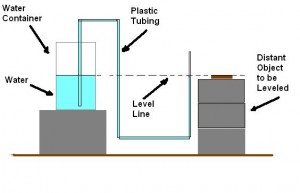
Mobile home water level

This is often the case when the distance between the two objects being leveled is considerable or intervening obstacles prevent the efficient use of a laser level.

One particular instance where this is the case is when the supporting piers are my home are being set to the same level. Sometimes these piers can be a considerable distance apart, on an 80 foot long double wide home the long diagonal distance is over 90 feet. There is no clear path underneath the home that would allow the use of a laser level, air conditioning ducts, plumbing pipes, I beams and other piers would obstruct the beam.

Despite the fact that a water level is a manual device it remains fairly accurate over this type of distance, even using the human eye it is still possible to be accurate to 1/8 of an inch.

There are of course some things to watch out for, in particular water bubbles in the line which will effect the accuracy.

The basic setup is a container of water and a length of plastic hose. One end of the hose should be submerged in the container of water,  the hose is then filled with water by sucking on the other end keeping the tube below the level of the water in the container.

The level of the water in the container and at the other end of the hose should be equal, this can be tested by placing one against the other.

The water container is set to the desired height and remains stationary while the tube end is moved around the job site to the various positions that need to be leveled . The far end of the hose needs to be made of a material that is clear and will allow you to see the level of the water.

If you’re working underneath a mobile home attach a magnet to the end of the hose so that it will stick to the steel I-beam allowing you to keep both hands free. This will make working and moving around easier and stop water leaking from the tube. Keep the open end of the tube ABOVE the level of the water in the container at all times.

There are a few things that will affect the accuracy of your level:

  •     Excessive cold weather will freeze the water in the line.
  •     Excessive heat sometimes causes bubbles to form in the line.
  •     Kinking of the tube will stop the free movement of the water.
  •     Care must be taken not to get the tube trapped under heavy objects.

How to level your Mobile Home DIY instructions for the home owner.

The purpose of this article is to explain to you how to level a mobile home. If you’re reading this it is most likely that you already know that you have an issue with your home. To some degree all homes will settle slightly over time and depending upon the condition and stability of the ground on your lot you may have a small or large leveling issue.

These instructions are relevant for mobile homes or modular homes built on pier foundations, where concrete blocks are loosely stacked on a concrete or ABS base pad with wooden shims and wedges. For the purpose of these instructions I will assume that the mobile home stands on its own and is not attached to any other structures including sun rooms, porches, garages or covered areas.

It is also assumed that sufficient sections of your mobile home skirting have been removed to allow you easy access and sufficient light to carry out the job.

Usually, the home will be sinking into the ground but it is unlikely that all areas of the home will sink at the same rate, and  when I say sinking I’m only talking about a small amount of movement. Even if your mobile home has only dipped 1 inch in a corner it could still be noticeable as you move around the house.

It goes without saying that a mobile home is a heavy structure often weighing several tons.

These jobs are best left to professional crews who fully understand the dangers involved and have the necessary skill and equipment to carry out these procedures. However, if you take your time and follow the instructions there is no reason why a homeowner cannot successfully level their home. However, if possible try to work with another person who can pass you the materials and keep an eye on the home for safety reasons

Basic Construction Tools required For the Leveling of Your Home:

  •        One water level.
  •        One torpedo level.
  •        Flashlight.
  •        12 ton bottle Jack.
  •        Hammer.

Materials Needed For a Re-level DIY (do it yourself) Project :

  • Pairs of pressure treated Wooden wedges.
  • 10 pieces of 2″ x 8″ x 16″ pressure treated wood.
  • 5 pieces of 1″ x 8″ x 16″ pressure treated wood.
  • 8″ x 8″ x 16″ concrete blocks. (To replace cracked or broken blocks)

Procedure:

Set up your water level to the approximate height of your mobile home piers, then take one end of the water level underneath the home.  Check the height of each pier and mark on it how far above or below the line on the water level it stands. Using this method you will be able to determine which pier or group of piers is the highest. Take note of this pier, mark it and set the water level to its height. The idea here is to bring all of the other piers up to the height of the highest one. The only time I wouldn’t use this procedure would be if for some reason the height of this one pier is abnormally high in comparison to all of the others.

Next set your water level to match the height of the highest pier which was identified in the previous paragraph.

You’re now going adjust the wedges on top of each pile of block until each pier matches the highest point.

  •         Using the 12 ton bottle jack raise the I beam to the correct height.
  •         Adjust the wedges accordingly.
  •         Work your way down one beam at a time.
  •         Do not lift the I beam any higher than necessary to adjust the height.
  •         Replace any broken or cracked blocks as you go through the procedure.
  •         Level the base pads as required.

Take your time and finish off each section before moving to the next.

If you decide to use a Licensed Contractor.

When you speak to a contractor make sure that you explain your concerns and that both of you agree on what you will get and how much it will cost. Be as detailed as possible and don’t make assumptions.

Most importantly write it down, so that  both parties have a point of reference to go back to if there is a disagreement..

When the job is completed ask the contractor to show you what has been done to your home.

To have your home leveled by our experienced crew call 863 808-2200

Originally posted 2014-03-26 13:29:41.

The post How to Level My Mobile Home, Full Water Level Instructions for Home Owners. appeared first on Level My Mobile Home.


source http://levelmymobilehome.com/how-to-level-my-mobile-home/

Sunday, 10 July 2016

Mobile Home Pest Control Tips and Tricks

This was posted by Rob

Mobile home pest control tips and tricks for manufactured home owners are generally the same as those for conventionally constructed homes.

There are however some particular areas that deserve special attention. These are particularly easy to overlook.

  • Rats and mice
  • Squirrels
  • opossums
  • Termites
  • Cats
  • Snakes and lizards
  • Insects ants cockroaches

and other pests can be a major source of annoyance for any homeowner. So before we take a look at the preventative measures  let’s examine what can happen if we leave these creepy critters to their own devices……

Here are are some simple preventative measures  to protect your home and your loved ones.

  • Check all exterior vents, siding, eaves, gutters, and air conditioner vents for openings. Be sure any wood in contact with the ground is treated. Check skirting for small tears or openings where mice and other pests can gain access. If they can get under your home, chances are they can come inside.

  • If you already have mice, use peanut butter as bait to capture them in traps you can set where you find the openings in your skirting. Once you feel you have captured the majority of them you should make necessary repairs to prevent re-entry.

  • If you find holes in the walls you can use steel wool to fill them. Mice cannot chew through the steel wool. You can then use a wall patch to repair the holes.

  • If you have an insect problem, depending on the severity, you can use a store bought insecticide (Remember to follow the instructions carefully) or it may be wise to call an exterminator. It’s a good idea to have your home inspected for termites annually, even if your mobile home has a metal roof and siding.

  • Wildlife will also attempt to live in your bottom board. They can destroy the insulation and damage the floor of your home. Some local animal shelters will let you rent live traps. It’s best not to use poison outside since it could harm your pets or your neighbors pets. Once you have removed the animal repair the bottom board and the skirting.

Read more here http://mobilehomepartsstore.com/latestnews/pest-control-tips-for-manufactured-home-owners/

Always contact a professional if the problem is too much to handle by yourself.

Originally posted 2016-06-08 17:29:17.

The post Mobile Home Pest Control Tips and Tricks appeared first on Level My Mobile Home.


source http://levelmymobilehome.com/mobile-home-pest-control-tips-tricks/